

How to Bring Warmth Into Your Home This Winter: A Designer's Guide to Finishes, Fixtures & Feeling
Discover how to make your home feel warmer this winter using intentional interior design choices – from finishes and fixtures to colour, texture and light. Sydney interior designer shares her top tips.
There is a particular kind of magic that happens when you walk into a home that feels warm. Not just physically warm – though that matters too – but warm in the way that makes you slow down, exhale, and think: I want to stay here.
This feeling doesn’t happen by accident. It’s the result of deliberate, considered design choices that work together to create a sense of comfort, intimacy and safety. And in June – in the middle of a Sydney winter, when the nights are long and the temperature drops – this feeling matters more than ever.
This month, I’m sharing exactly how I approach warmth in interior design for my Sydney clients: from the finishes and fixtures that make the biggest impact, to the textures, colours and lighting choices that transform a house into a home. Whether you’re working on a new build, in the middle of a renovation or simply looking to refresh what you already have, there’s something here for you.
And at the end, I’ve created a free downloadable guide – your complete Winter Warmth Style Checklist — so you can take everything here and apply it to your own space immediately.
Understanding Warmth in Interior Design
It’s Not Just About Temperature
When designers talk about a ‘warm’ space, they’re using the word in two distinct ways. The first is thermal: literal physical warmth, created through insulation, heating, and materials that retain heat. The second – and the one we’re focused on today – is visual and psychological warmth: the sense of comfort and intimacy created by specific design choices.
Visual warmth is achieved through a combination of five key design elements:
◆ Colour and undertone: Warm hues and warm-undertoned neutrals
◆ Material and finish: Natural, tactile materials that read as warm
◆ Texture: Layered, varied surfaces that add visual and physical depth
◆ Light: The colour temperature and placement of artificial and natural light
◆ Scale and proportion: The relationship between furniture, ceiling height and space
When these five elements work in harmony, they create a space that feels, instinctively and immediately, warm. Let’s break each one down.
Warm Finishes - The Foundation of a Warm Home
Timber
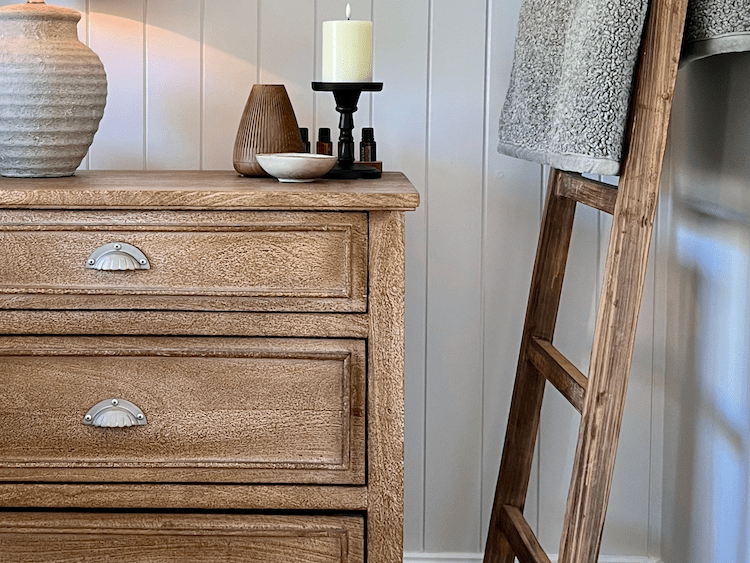
Timber is perhaps the warmest material in interior design. Its grain, its depth, its natural variation — all of it reads as inherently warm and organic. From floorboards to cabinetry, from feature walls to furniture, timber softens architectural lines and adds the kind of depth that no manufactured material can replicate.
In a Sydney winter, consider adding timber through: flooring (if you don’t already have it), open shelving in kitchen or living areas, a timber dining table or coffee table, or even a simple timber lamp base. Each choice contributes to the overall warmth of the space.
For finishes, lean toward mid-toned timbers — blackbutt, spotted gum, American oak — rather than very pale (which reads cool) or very dark (which can feel heavy). The warm, honey tones are your sweet spot.

Natural Stone
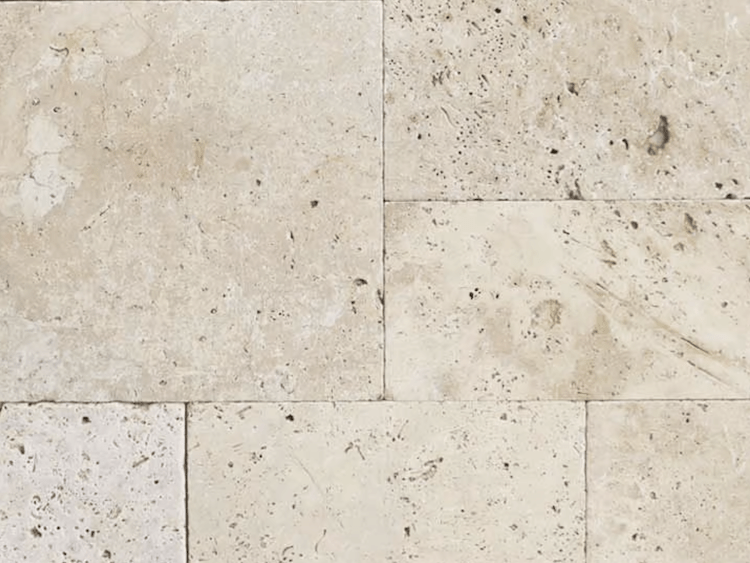
Stone might seem counterintuitive – we associate it with cold, hard surfaces. But warm-toned stone, particularly limestone, travertine and warm marble, is one of the most luxurious ways to add warmth to an interior. Used on benchtops, feature walls or even as decorative objects, stone in warm beige and cream tones adds a grounded, organic quality that instantly elevates a space.
Rattan and Woven Materials
Rattan, cane, jute and seagrass are experiencing a well-deserved renaissance in Australian interior design. These materials add warmth through their texture and natural colour, and they bring an organic quality that softens harder architectural elements. A rattan pendant light, a woven storage basket, a cane-detailed sideboard – any of these additions will immediately warm a room.
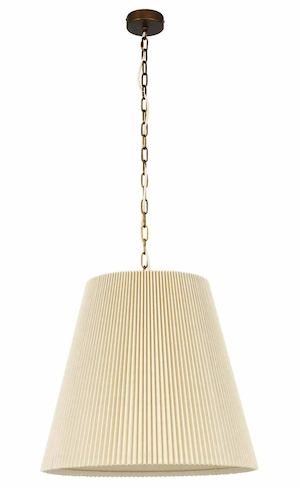
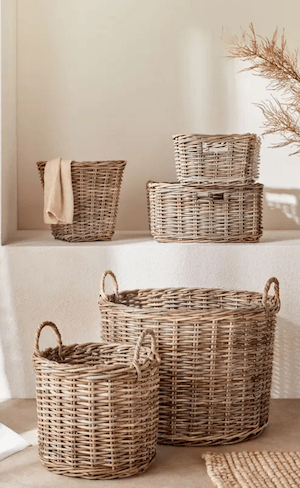
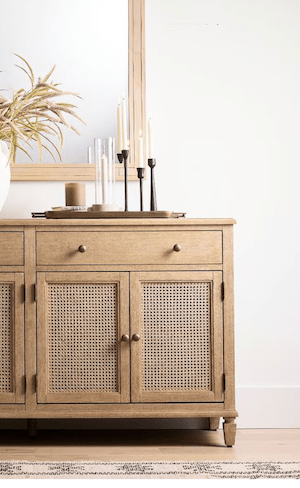
Image references, 1st Beacon Lighting, 2nd Freedom Furniture, 3rd Pottery Barn
Brass and Warm Metals
The shift from cool chrome to warm brass has been one of the most significant – and most welcome – trends in Australian interior design over the past decade. Brass tapware, door handles, light fittings and cabinet hardware introduce a warmth and richness that chrome simply cannot match. Brushed brass or unlacquered brass (which patinas beautifully over time) are the most versatile options.
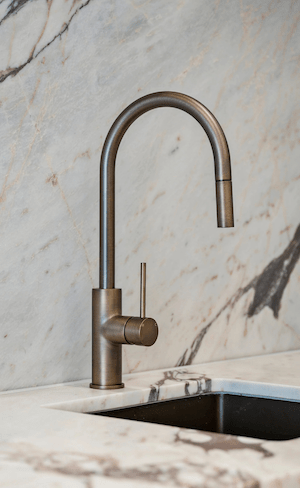
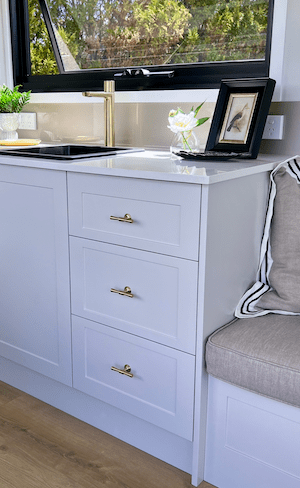
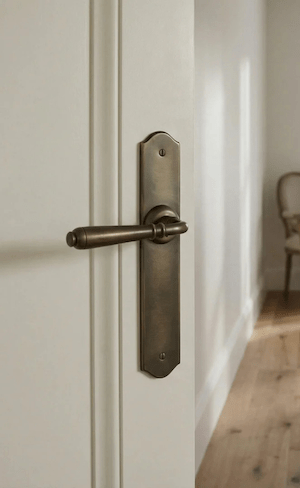
Image references, 1st Rainco, 2nd Stylistic Designs Luxe 6.0 Project, 3rd The Renovation Shop
Colour and Undertone - The Psychology of Warm Walls
Paint colour is the single most transformative element in interior design, and the most misunderstood. The secret to choosing a warm paint colour isn’t about selecting an obviously warm hue – it’s about understanding undertone.
Every paint colour has an undertone – a secondary colour that becomes visible when the paint dries on your walls. Cool undertones pull blue, green or grey. Warm undertones pull red, yellow or orange. Even a wall painted in what appears to be a neutral grey can feel icy or enveloping, depending entirely on its undertone.
For a winter interior, consider these warm-toned directions:
◆ Deep terracotta or burnt sienna: Rich and grounding, beautiful in living rooms and studies
◆ Warm taupe with red undertones: Versatile and sophisticated – works in almost any room
◆ Earthy ochre: Sunny and warm, excellent in kitchens and dining rooms
◆ Creamy off-white: Never bright white – choose a white with yellow or pink undertones
◆ Dusty rose: Soft and romantic, warmer than it might initially appear
Textiles, Layers and Texture
In winter, textiles are your most powerful and most accessible tool. They don’t require a renovation. They can be changed seasonally. And they have an immediate, visible impact on how a space feels.
The key to styled-looking textiles is variety in texture with consistency in tone. If you keep your colour palette tight – working within three to five complementary tones – you can mix as many different textures as you like without the result looking chaotic.
In June, consider swapping your lighter cushion covers for velvet, linen or wool options in warm tones. Add a chunky knit throw over every sofa arm. Layer a jute or wool rug over existing flooring. These are seasonal additions that can come back out every winter, building your interior over time.
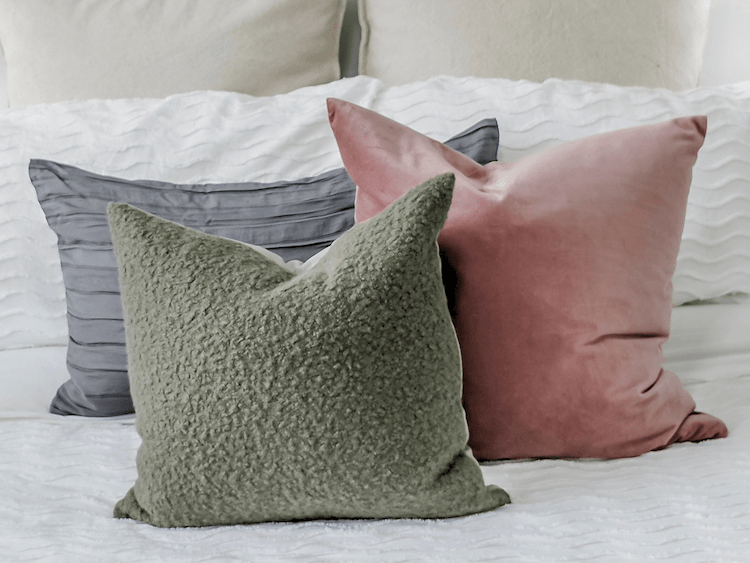
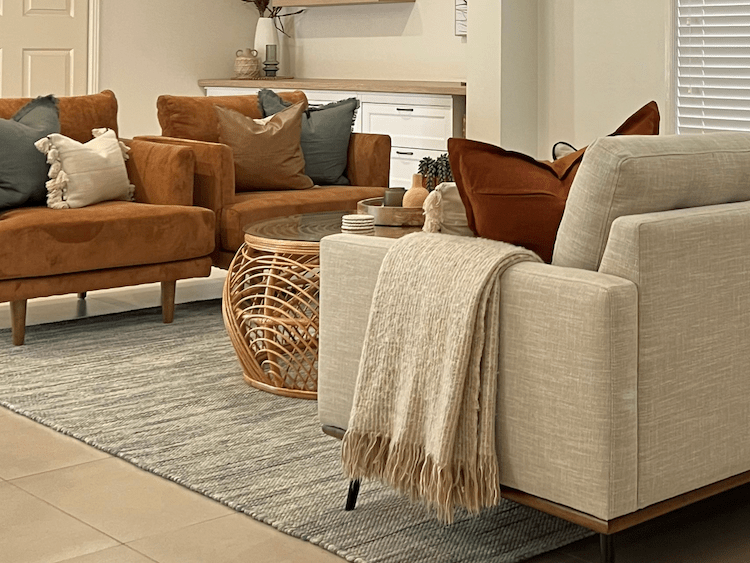
Image references, 1st Stylistic Designs Teen Project, 2nd Stylistic Designs West Hoxton Project
Lighting - The Fastest Way to Change a Room's Warmth
Lighting is the most underrated element in interior design, and the one with the highest return on effort. The colour temperature of your light bulbs alone can make the difference between a room that feels warm and inviting and one that feels clinical and flat.
Colour temperature is measured in Kelvin (K). For warm, inviting interiors, choose bulbs between 2700K and 3000K – this is the range that produces the warm, amber-toned light similar to candlelight or the golden hour. Anything above 3500K moves into cool white territory.
Beyond bulb choice, consider:
◆ Layered lighting: Combine overhead, task and ambient light sources rather than relying on a single ceiling light
◆ Lampshades: A warm-coloured shade (terracotta, cream, rust) will tint the light beautifully
◆ Candles: The original warm light source. Use them generously in winter – on dining tables, in fireplaces, on coffee tables
◆ Dimmer switches: The single best value improvement you can make to any room. Control the mood with the turn of a dial
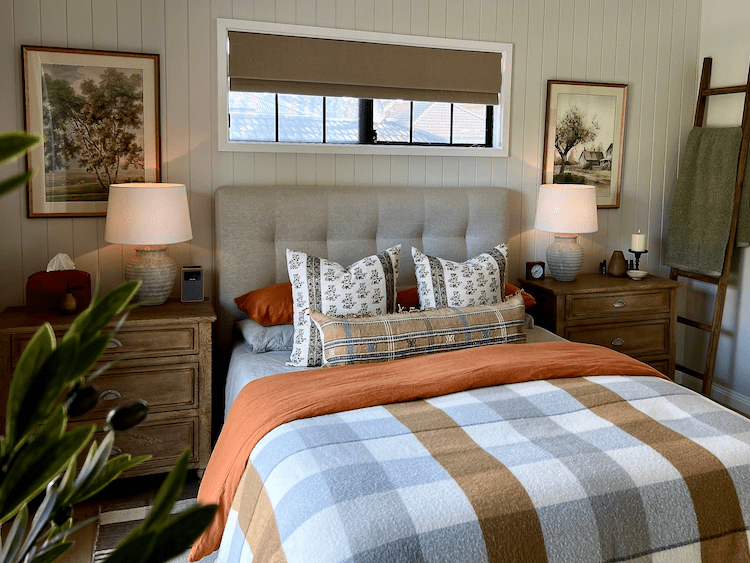
Image reference Stylistic Designs Carlton Project
Bringing It All Together - A Seasonal Approach
One of the most beautiful things about interior design in Australia is that our seasons are clear and distinct – and they give us the perfect rhythm for refreshing our spaces without the expense of a whole renovation. Winter is a natural invitation to layer, to warm, to add depth and intimacy to the spaces we live in.
This doesn’t mean creating a completely different interior every few months. It means understanding which elements are your permanent, structural warmth (finishes, fixtures, wall colour) and which are your seasonal warmth (textiles, candles, styling accessories). Build the permanent first, and let the seasonal additions evolve naturally over time.
A truly warm home is one where every decision – from the tap in your bathroom to the throw on your sofa – has been made with intention and care. It takes time to build, but the result is a home that feels genuinely and deeply yours.
Because your home should feel like a place you can’t wait to return to – especially in the middle of winter. And warmth is not a luxury or an afterthought: it is the foundation of a well-designed interior.
To help you take everything in this post and apply it to your own space, I’ve created a free downloadable Winter Warmth Style Guide, it’s a comprehensive checklist and room-by-room warmth audit that you can use immediately.
You can download it by clicking the link here and it’s yours. 👉 Free Downloads
And if you’re ready to work with a designer to bring real warmth into your home – whether that’s a colour consultation, a room refresh or a complete interior design project – I’d love to hear from you.
You can reach out and book a free discovery call on our contact page or 👉 Book a Free Discovery Call
Until next time,
Mel x
For more information on how we can work together to create your perfect space check out our Interior Decorating Services.
Relatable posts

